
There aren’t a lot of companies that are still going strong after 100 years. However, that is how long many of the movie studios have been around. Despite people saying that “television with be the death of movies”, and then “home video will be the death of movies”, and then recently “online streaming will be the death of movies”, many of the major studios that started around 100 years ago are still going strong. Universal and Paramount Pictures are 111 years old, Columbia (now part of Sony Pictures) and MGM (now owned by Amazon) are 99 years old, and this year Warner Bros and Walt Disney Pictures are celebrating their 100-year anniversary.
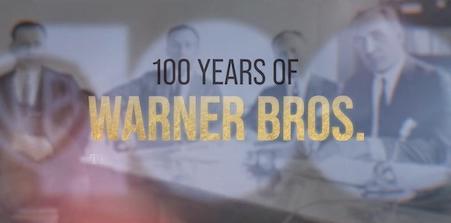
As part of the celebration, both Disney and Warner Bros are doing special things including 100-year anniversary events, screenings, and special 100-year anniversary merchandise. I’m not sure if Disney is doing a documentary about their 100 years, but Warner Bros recently had a screening of their “100 Years of Warner Bros” documentary at Cannes. After that, the 4-part documentary started showing on the Warner Bros streaming service “Max” (which just changed their name from “HBO Max”).
Directed by Leslie Iwerks and narrated by Morgan Freeman the documentary has a lot of interviews with producers, directors, actors, former and current studio executives, grandchildren of the original 4 Warner brothers who started the studio, and others talking about the 100 years that Warner Bros has been around.
Part 1 of the documentary – “The Stuff That Dreams Are Made Of” – talks about how the movie studio started by the four Warner brothers – Harry, Albert, Sam, and Jack Warner – became one of the major Hollywood studios. The biggest and most important risk they took was taking the leap from silent movies to “talkies” with “The Jazz Singer” in 1927. After that movie, the entire movie industry followed Warner Bros by creating movies with sound. Also, Warner Bros was fortunate enough to work with great filmmakers and directors on movies like “Casablanca”, “The Maltese Falcon” and all 3 movies James Dean starred in before he died – “East of Eden”, “Rebel Without a Cause”, and “Giant”. However, they also had problems. They had trouble with some stars under contract. A few of them sued the studio to get out of their 7-year exclusive contract – which was often extended when the actor refused a role the studio wanted them to do. According to this documentary, Warner Bros was also the only studio to refuse to work with the German censor who needed to approve movies shown in Germany to make sure they didn’t have any negative references about Nazis. While other studios caved to the German censors so they could release movies in Germany, Warner Bros specifically made movies criticizing the Nazis.
Part 2 – “Clint, Kubrick, and Kryptonite” – starts in the 60s when the 4 Warner brothers left the studio. Jack Warner, the last brother to leave the company, sold a lot of his studio stock to Seven Arts Productions. In the 60s and 70s, the new studio worked on creating relationships with actors and filmmakers such as Clint Eastwood, Stanley Kubrick, Martin Scorsese, and Mel Brooks. They made movies that changed movie genres. “Blazing Saddles” redefined the comedy genre, “The Exorcist” and “The Shining” redefined the horror genre, the “Dirty Harry” movies were a new type of action movie, “Superman” was one of the first movies about a comic book character, and “All The President’s Men” was one of the first political dramas. According to the documentary, the “Dirty Harry” movies were the first movie franchise. Although there had been movie sequels before that, there was never different movies with the same character in it before.
Part 3 – “Heroes, Villains, and Friends” – starts in the 1980s when Warner Bros was in financial trouble. The studio lost millions of dollars and had to lay off staff. The company had to rely on successful movies to keep going. They had box office success with movies like “Goonies”, “Lethal Weapon”, and “Batman” (1989), and “Selina”. They also had critically successful movies like “The Color Purple”, “Driving Miss Daisy”, “Goodfellas”, “JFK”, and “Malcom X”. This is the first part of the documentary that also talks about how Warner Bros became a major television studio with shows like “ER” and “Friends”.
Part 4 – “Wizarding World and The Big Bang” – is mostly about Warner Bros in the 2000s when it merged with AOL and eventually became Warner Media. It released a lot of notable movies and TV shows including “The Dark Knight” trilogy, “The Matrix” movies, the “Harry Potter” movies, the Ellen DeGeneres talk show – the first talk show starring an openly gay woman, “The West Wing” TV show, “The Big Bang Theory” TV show, the “Wonder Woman” movie, and “The Joker” movie.
As you can see from the length of my descriptions of each part, I was really interested in the first part of the series but then my interest waned for the other parts. That’s because in each part, the documentary talks less about the studio and more about the hit movies and TV shows the studio made. The stories about the 4 Warner brothers starting the studio in the first episode were very interesting. Part 2 had less stories about what was going on at the studio. It mostly mentions big events like when the original 4 Warner brothers left the studio and sold their shares to another company. Approximately 20 minutes into part 3 – right after the Time Warner merger, the stories about the studio are hardly mentioned. Part 3 and 4 seems to talk about the hit television shows that Warner Bros made instead of talking about what was happening at the studio.
For the first and second parts of the documentary, the documentary is 50% what was happening at the studio and 50% about the movies that they released. In the third and fourth part, the split goes to about 20% studio, 50% movies, and 30% television shows. The documentary starts to have a pattern that goes: “they produced “Unforgiven”, and then “Eyes Wide Shut”, and then “The Matrix”, and then something happened at the studio, and then they made the TV show “Friends”, and then the “Harry Potter” movies, etc., etc.
When they do mention what’s happening at the studio in the last 2 parts, it’s often to highlight something great that happened at the studio. For example, they (briefly) mention that Ted Turner’s company merged with Time-Warner. It seems like they only mention it because it led to Warner Bros acquiring a lot of the MGM classic movies that Ted Turner owned such as “Wizard of Oz” and “Singin in the Rain”. They also (briefly) mention when producers Peter Guber and Jon Peters left Warner Bros and went to Columbia Pictures right when Sony purchased Columbia. The reason they mention that is because part of that deal made Columbia Pictures move to the Culver City studio lot (for a few years Columbia Pictures and Warner Bros shared the Burbank lot renamed “The Burbank Studios”). After that deal, Warner Bros had the entire Burbank studio lot again. The next thing the documentary shows a star-studded party that some people in the documentary called “the biggest party ever”. The night they unveiled the water tower on the Burbank lot with the Warner Bros logo back on it.
Also, other than the first part, the documentary skips over any controversy. They don’t mention the arguments with the filmmakers such as when they made “Blade Runner” (the filmmakers didn’t like the voice over that the studio supposedly requested), or how the studio “slightly edited” Stanley Kubrick’s final movie “Eyes Wide Shut” after Kubrick’s death.
Somehow, they even got Christopher Nolan to comment about the studio and what it was like to make movies such as “The Dark Knight” trilogy at the studio. It makes it seem like Nolan was still working with the studio although he just made his latest movie “Oppenheimer” at Universal, Warner Bros competitor and neighbor (the studios are literally a block away from each other).
Overall, if you want to know all the little-known details about the history of the Warner Bros studio, this documentary has a little bit of that in the first couple parts. The full documentary basically seems like an extra-long promo for the studio. I’ve never been on the Warner Bros studio tour, but I’m guessing the tour mentions a lot of the history that this documentary talks about. There’s even a section in the documentary that talks about when the studio decided to display costumes and props from Warner Bros movies and television shows for the Warner Bros studio tour.
I give it a 5 out 10.
 LOS ANGELES FILM REVIEW